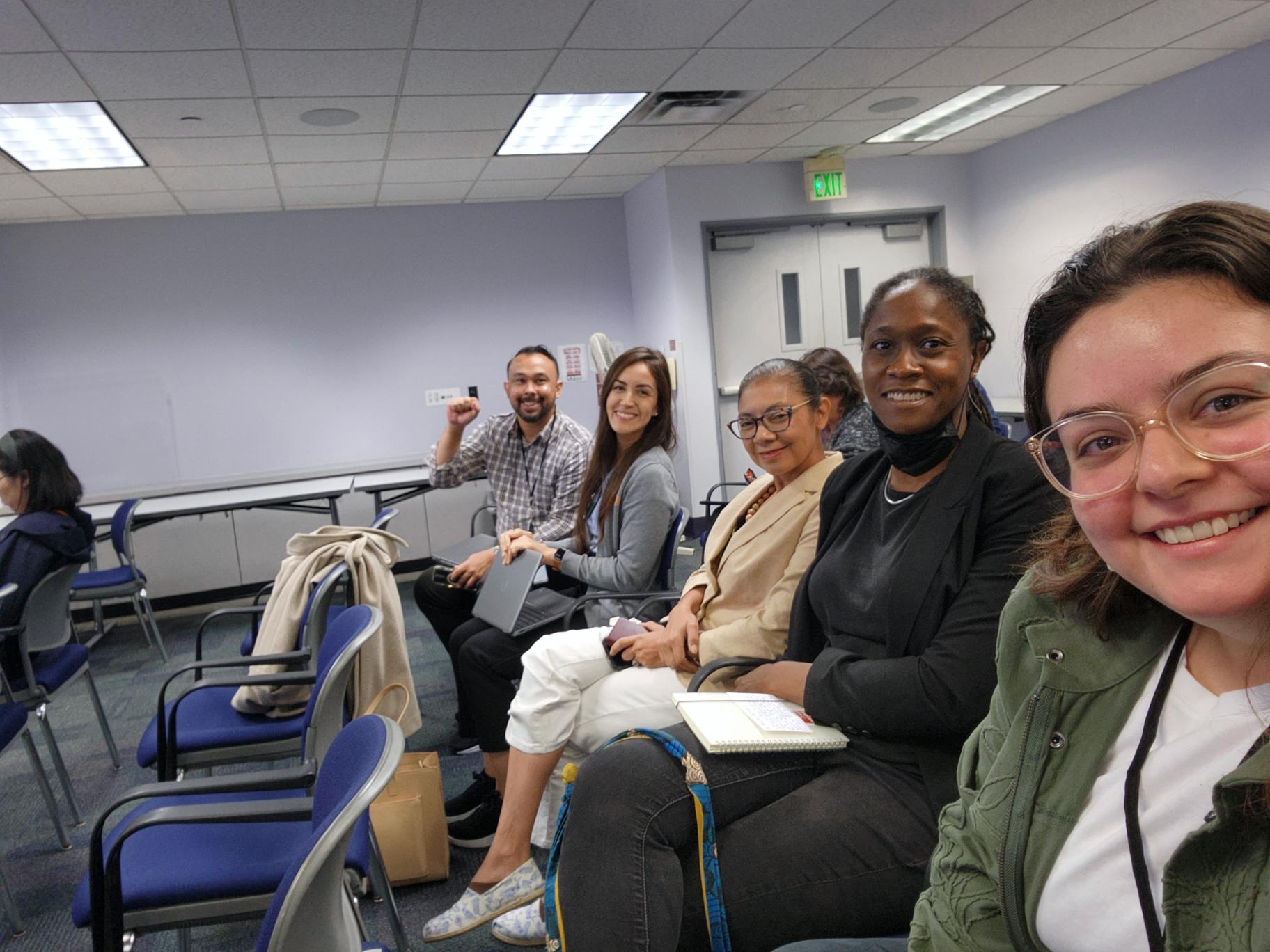
It was a challenging year in anti-hunger policy, but there was also so much hope, action, and impact from the advocacy in our community. It was a year that showed us why it is so important to continue our work in policy & advocacy to make real lasting change as we look towards an Alameda County where everyone is nourished and thriving.

State, Federal, and Local Advocacy
This year was immensely challenging. Over the summer, the federal government passed the largest cut to food assistance ever, potentially eliminating 9 billion meals annually across the country. This cut to SNAP (known in California as CalFresh) will be devastating to our community, pushing even more people into hunger and poverty.
SNAP is the nation’s most effective anti-hunger program, providing 9 meals for every 1 meal provided by food banks. The burden that will be shifted to food banks like ACCFB is tremendous. In Alameda County alone, 1 in 4 of us are experiencing food insecurity, and an estimated 20,000 out of the 175,000 individuals that rely on SNAP benefits to ensure they have enough food on the table for themselves and their families, have been impacted by these cuts and will need to turn to food banks for support.
But here’s the good news: Advocacy works. In anticipation of these devastating cuts from Washington, D.C., you sent hundreds of messages to demand action from your state legislators in Sacramento, and dozens of you joined us at April’s Hunger Action Day in front of the State Capitol to share stories directly with legislators: letting decision-makers hear the real impact of food insecurity and the urgency of reform.
This collective advocacy helped raise awareness of how hunger intertwines with housing, health, and immigrant rights. It also affirmed our commitment at ACCFB to root food justice in community voice and policy change. As a result, we secured $80 million in funding for California’s food banks (way up from the planned $8 million!) so that we’re better equipped to respond to the coming surge of hunger.
Local advocacy efforts were also strengthened in our community this year. The Policy & Advocacy team prioritized the voice of the community in all its efforts to hold government accountable for working to end hunger and poverty.
Our County partners also believe that food is a human right, and during the government shutdown, after community organizers mobilized to attend the County Board of Supervisors meetings, they affirmed their support by allocating $8.3 million to ACCFB and our network to mitigate the impact of federal actions.

ACCFB was thrilled to bring back the Policy Breakfast for the first time in six years. With support from our community organizers and partners, we helped mobilize over 100 attendees who are shaping the future of food access and food justice in Alameda County.
We are excited to announce that ACCFB’s first-ever local policy agenda will be published in early 2026 to guide us through the next year!
Community Organizing
The newest branch of ACCFB’s Policy & Advocacy team is Community Organizing where the focus is empowering individuals and communities to advocate for themselves and challenge the systemic barriers that perpetuate hunger. This year, Community Organizing at ACCFB grew in steady, intentional ways. What started as a small group of curious community members gathering around food has become a strong network learning together, taking action together, and shaping a shared vision for food justice. At the center of that vision for food justice is the shift from client to leadership.
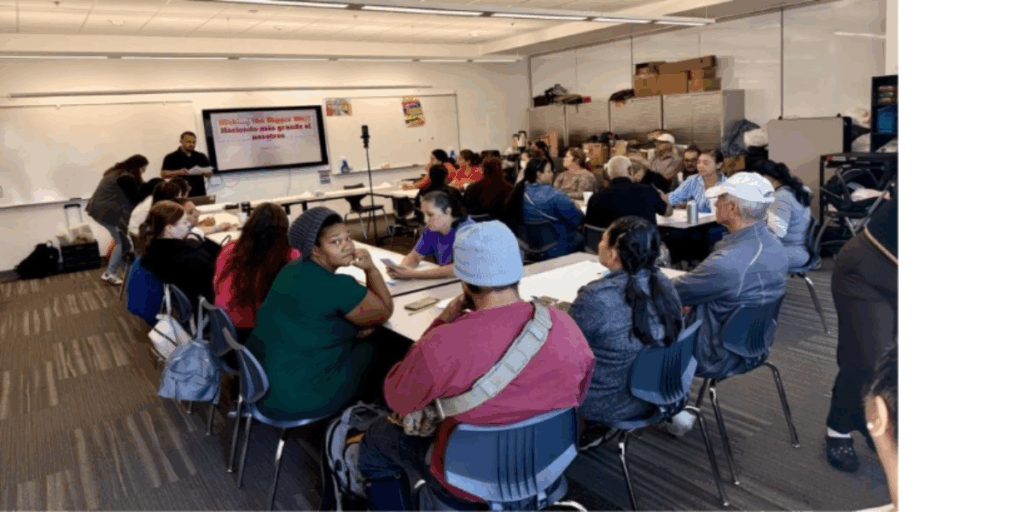
Food is more than a basic need. This year reminded us that it is also a place where people find community, build confidence, and step into leadership.
We continued conversations where partner agencies shared their challenges, their hopes for the community, and their commitment to supporting residents beyond the pantry line. Our team also continued working with many intersectional coalitions. These conversations guided our priorities and helped shape the trainings and campaigns we led throughout the year.
Many partners began identifying neighbors and volunteers interested in making changes in their communities. Our collaborations with our partners help us connect and build trust with the families we serve across the county, which has helped us grow a strong and diverse leadership base.
Since the Food Justice Organizing Task Force’s launch in March: Organizing has over 220 Active Individual Supporters, 35 Active Volunteer Members, 5 Core Volunteer Organizing Members, and over half of our partner agencies have participated in a Policy & Advocacy meeting.

Volunteers stepped forward in new ways this year like joining our Task Force, helping with public comment (nearly 40 community speakers organized for public comment this year!), and much more. Others have shared their own lived experiences with hunger or housing instability and connected those stories to broader policy issues.
The Task Force continued to serve as a home base for collective action. Building on that foundation, this year, we launched our Community Organizing Leadership Academy Program (COLAP), a series of 16 workshop sessions, 4 of which were held this year, to build community while getting political education and leadership skills and on how to advance social justice work.
Looking ahead, we plan to continue growing our Task Force and Leadership Academy and deepen our relationships to affect critical policies.
Thank you to everyone who showed up this year. You helped build a shared vision grounded on tangible actions to make changes we want to see in our communities. We look forward to continuing to imagine and work together in the year ahead to create an Alameda County where all of us are nourished and thriving.
Ready to get involved? Join us in advocating for change and organizing with the community!