Food Recovery: Partnerships for a more equitable and sustainable future

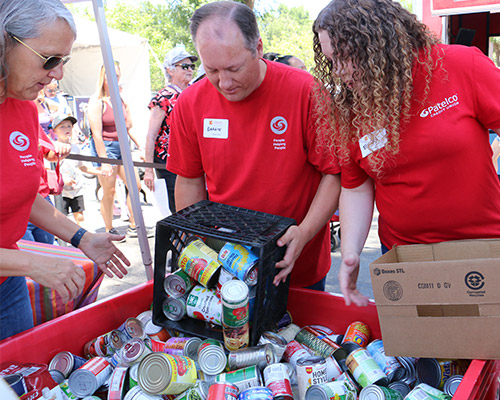
Volunteers at Tri-City Volunteers Food Bank, an ACCFB agency and food recovery partner, sort through donations as they prepare for a food distribution.
Earlier this year, we shared an update about how ACCFB’s Food Recovery Program (FRP) helps bring recovered food to our agency partners while reducing greenhouse gas emissions caused by food waste in the blog post: ACCFB’s Food Recovery Program: A win for the community and the environment. Now we’re back with more! This time, we’re taking a deeper look at how the Food Recovery Program is growing and the impact it’s having with insights from the people behind the work.
Growing Impact
The Food Recovery Program has been running since 2012 and has continued to see growth in recent years. “Back in May 2021, ACCFB was recovering just over 500,000 pounds per month. Since then, we have doubled our monthly recovery pounds to over 1 million pounds per month,” says Xochi Hernandez, Sustainability Program Manager.
As the program grows, pounds are not the only measure of success. “To enable this growth, we had to be strategic in bringing new partners into the program. Our number of participating donors went from 113 (May 2021) to 167, actively donating to 76 agencies (up from 42 agencies in 2021!),” Xochi explains.

Over the past five years, ACCFB’s food recovery totals have more than doubled.
Variety and Cultural Specificity
“FRP brings an array of benefits to our agencies like more variety and culturally relevant items, which is a great hit with their communities,” explains Karina Torres, Sustainability Program Coordinator. Food recovery supplements food sourced from ACCFB’s warehouse, including items like additional proteins, dairy products, specialty produce, and non-food items such as pet food, cleaning products, and even fresh flowers.
“These items allow our agencies to provide products that our neighbors are really excited about and add to the dignity of their distributions as folks are able to recognize some of their favorite items from the grocery store. Because we partner with culturally-specific grocery stores, we’re able to help procure items that neighbors really resonate with,” says Xochi.
Sustainability is Central
In addition to the variety and quantity of food agencies and their clients receive, Xochi explains that “An added benefit is our agencies are able to positively contribute to the environment by keeping organics out of the landfill.”
As sustainability is a core component of food recovery, there are also opportunities to further reduce environmental impact, such as managing unusable food through composting and recycling programs.
Community Trust and Resilience
“Agencies often tell us they feel more seen and supported through the FRP—not just because of the food, but because of how we work together,” says Siu Chim, Sustainability Program Coordinator, explaining that “In 2024, we hosted our first-ever FRP Agency Summit, alongside our annual agency survey, as a way to deepen dialogue and share learnings.”
The consistency of the program helps build a strong relational network. Siu adds: “The variety and cultural relevance of the items is a big benefit—but perhaps the deeper value is trust. That trust gives agencies the confidence to experiment, to expand their programming, and to rely more consistently on food recovery as a dependable channel. And when that trust grows, the whole system becomes more resilient.”
Looking Ahead
And finally, we’re excited to welcome a new face to the FRP team: Genevieve Kosciolek, Sustainability Program Coordinator! As the program continues to grow, the team is thinking big.
They’re asking: How do we design systems that are both efficient and caring? That question is at the heart of where the FRP is headed next.